Could you run Tesla’s Nevada Gigafactory off the roof?
Hey guys, Mike here.
I love looking at big industrial sheds and asking the same question I ask on a homestead: what’s actually on the roof, what’s stored on site, and what would it take to stand on your own?
Tesla’s Gigafactory in Nevada is a good one. It’s where they build cars and a lot of the batteries you see in the news — Powerwalls and Megapacks rolling out of the same campus.
So: how much solar is on that roof, how much battery is serving the factory, what difference does it make, and what would true off-grid car-building look like?
22 September 2026 · NevadaWhat Tesla said vs what’s reported
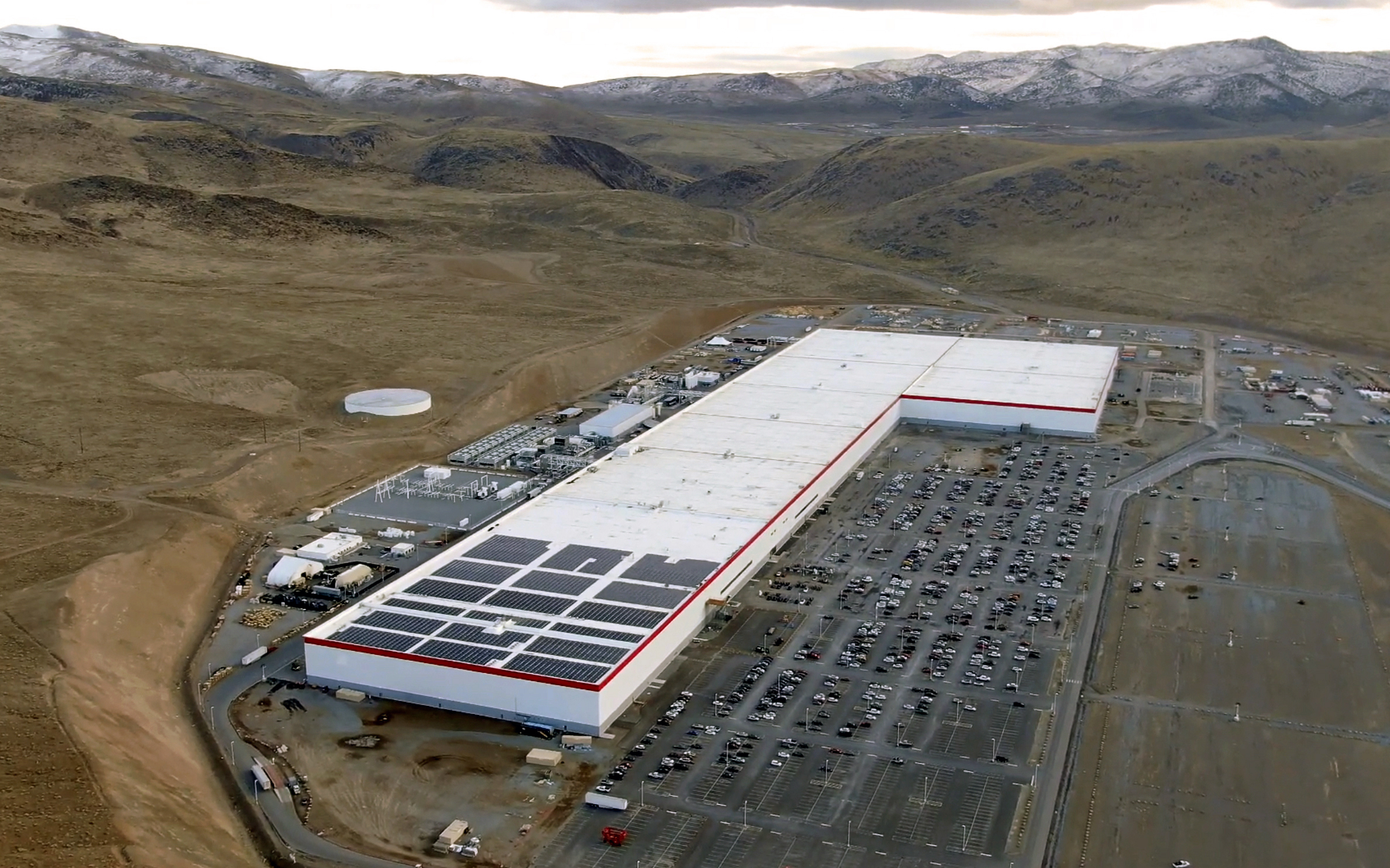
Back in 2017 the investor story talked about huge rooftop solar — on the order of 70 MW of panels, with ground solar in the mix, and daytime excess going into Powerpacks. That was the design peak.
Later Tesla talked about covering the roof of the then-current structure — a goal around ~24 MW. The 2020 Impact Report also logged an earlier milestone around 3.2 MW.
The best public “what’s on the roof now” figure we have is from September 2022: a Tesla infrastructure lead put installed rooftop solar around ~8 MW (reported via CNBC and picked up in industry write-ups).
Separate public plant filings (EIA / Global Energy Monitor style phase totals) sit nearer ~5.9 MWac across operating phases. That may not line up one-for-one with Tesla’s ~8 MW claim — different DC/AC counting, different phases — so treat both as public labels, not a lab measurement.
The old 70 MW / “100% sustainable factory” line was a design goal. It is not today’s operating reality.
What’s on the roof in house terms
We use the same card basis as the rest of this series: 10 kW home solar and about 1,400 kWh per kW per year.
At ~8 MW of rooftop:
- About 11.2 GWh of solar energy a year (teaching conversion)
- About 800 × 10 kW home systems — spoken: about eight hundred homes of solar on one factory roof
About 11.2 GWh a year
Teaching conversion at 1,400 kWh per kW per year.
800 × 10 kW home systems
Spoken: about eight hundred homes of solar on one factory roof.
That’s a serious array. It is still a thin slice of a factory that builds cars and batteries at industrial scale.
Battery on site — production vs storage for the plant
Here’s the bit most people blur.
Nevada makes batteries. Yards full of Megapacks and Powerwalls are inventory and product. That is not the same as a published figure for storage serving the factory load.
Public sources do not give a verified MWh for on-site microgrid storage at the plant. The 2017 plan talked about putting excess daytime solar into Powerpacks — intent, not a published installed MWh we can cite today.
So the honest line: solar on the roof is reported; storage serving the plant is not published. We don’t invent it.
What difference ~8 MW actually makes
On a sunny hour, a few megawatts of rooftop help. Against factory demand estimates in the hundreds of megawatts for connection / peak delivery sketches, and annual energy sketches in the thousands of gigawatt-hours, rooftop solar covers a few percent of the story at best — and nights still lean on the grid unless you buy a mountain of storage.
Public generation data for the solar plant at the site sits in the few GWh per year range — consistent with a few megawatts of roof, not a plant that runs itself.
Same physics as a shed. Scale changes. Physics doesn’t.
What true off-grid / self-sufficient car-building would take (teaching sketch)
Tesla does not publish a live “this is our yearly kWh” number we can treat as audited fact. Public sketches that reverse-engineer bills and franchise-style reporting land around ~1,700–2,300 GWh per year. We’ll use a mid teaching figure of ~2,000 GWh/year — labelled estimate only.
Using 10 kW / 20 kWh and ~1,400 kWh/kW·year:
- Solar to match that annual energy: on the order of ~143,000 × 10 kW home arrays
- One average day of energy: about ~5.5 GWh
- Batteries to store one average day: on the order of ~275,000 × 20 kWh home packs
~143,000 × 10 kW
Home arrays to match the mid teaching figure.
~5.5 GWh
Annual energy split across the year.
~275,000 × 20 kWh
Home packs for that one average day.
That’s annual energy matching plus one average day of storage — not rain weeks, not Nevada dust storms, not a full process-load shape. Peak connection sketches of ~100–300 MW sit in a different universe from an ~8 MW roof.
If the standard is standing on your own while you build cars, you size sun and storage for the worst useful day you accept — and you name the days you won’t.
Plain summary
Tesla’s Nevada Gigafactory has real rooftop solar — publicly talked about around ~8 MW, with older goals much higher. That’s about eight hundred home solar systems on one roof. On-site battery production is huge; on-site battery serving the plant is not a verified public MWh. Full off-grid car-building at teaching mid demand is a six-figure home-array problem, not a roof job.
That’s what it would take.
Figures from Tesla Impact Report / infrastructure quotes via CNBC and industry coverage, 2017 investor handout reporting, EIA / GEM phase totals, and publicly cited demand sketches (Navigant-era / former logistics quotes / bill reverse-engineering). Load and storage-serving-the-plant figures are teaching estimates or unpublished — not company live disclosures.
Homes, farms, commercial loads
We design solar and battery plants for homes, farms, and commercial loads that care what happens after grey weeks. Start a custom design with The Off Grid Shop — or call or text 0483 927 257.
Want to see a visual of what it would actually take to run the Gigafactory off-grid? Check Instagram, Facebook, and YouTube — then come back here for the full walk-through.
Thank you,
Mike
The Off Grid Shop