The ultimate guide
to off-grid living.
Off-grid living, at the scale we design for, means the property makes and manages its own power. This is the power side of that life: winter, storage, a generator rule, and a drawing that comes before the gear.
Designed in Lismore · installed by accredited localsOwning the supply
Stand-alone power is the site with the poles gone. You own the system. Energy independence, in this shop, means that — not a slogan, and not a shopping list. A hybrid system (solar plus a battery, with the grid as backup) is the same idea with the connection kept as a fallback.
The rest of a life off the grid — water, food, the road in — is yours. We design the electricity so the house still runs in the week the weather goes quiet.
Not a lifestyle kit
One design
Panels, storage, inverter and generator rule, sized together. That is an off-grid system, drawn for the property.
Beginner, in order
How the sun becomes household power, including the mistakes that show up on the drawing, is on how off-grid solar works.
What carries the quiet days
The off grid battery is sized with the array. Lithium is the usual chemistry. Lithium vs AGM covers sealed lead-acid.
The design day
A bright January proves little. The drawing uses the dull weeks and the loads that stay on.
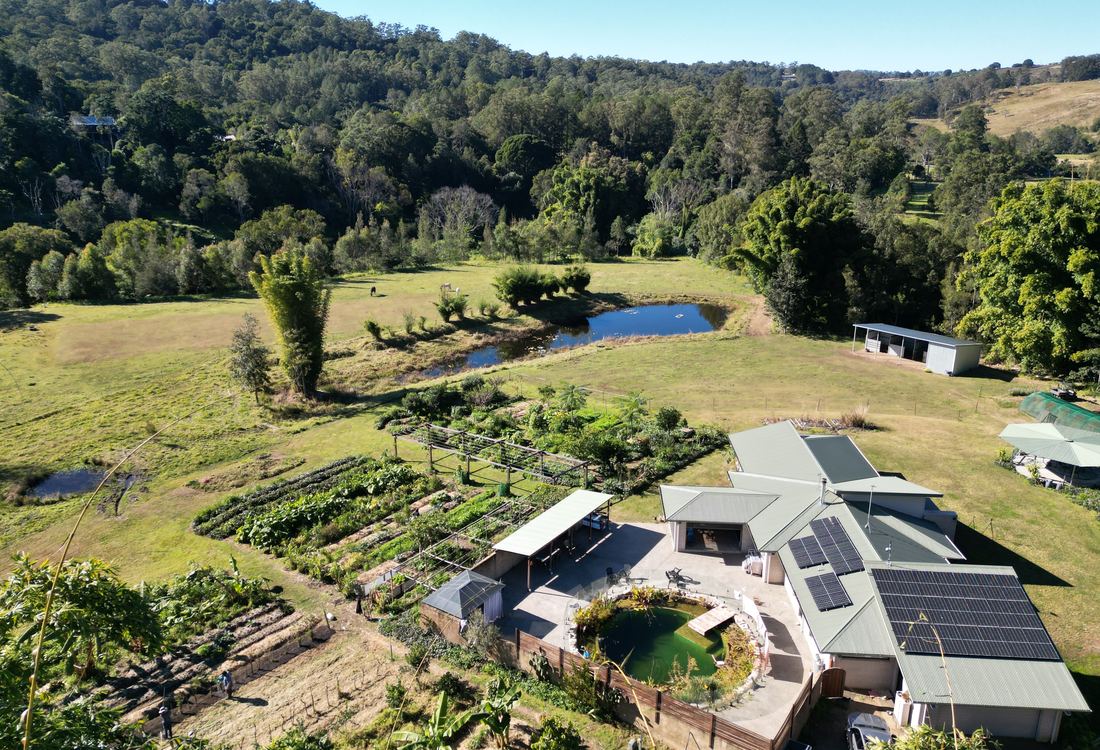
Property, then design, then gear
Fifteen years of stand-alone builds sit behind that order. The platforms — Sigenergy, Deye, EcoFlow, Victron — are named on what we install, after the loads are known. Real houses we have already built are on our work.
What changes once the poles are optional
Evenings run on stored energy. A run of cloud is a number of days the battery was drawn for, not a surprise. The generator has a start rule, so the darkest fortnight is a planned input rather than an emergency. If the grid is still there, it is the fallback, touched when weather and loads line up against the house.
Occasional use is a different drawing from a full-time house. A weekender that sits empty for months is not sized like a family that is home every night. Say which one it is. The design follows that.
Where an install actually happens
We install where accredited installers are on the ground: Northern Rivers, Tweed, Gold Coast, Mid North Coast, and the South Australian towns on the areas page. Outside that map you get a straight answer, and we check whether a preferred partner can take the site on.
NSW Lismore · Ballina · Byron · Kempsey · Coffs Harbour · Grafton QLD Tweed · Burleigh · Tamborine SA Adelaide Hills · Fleurieu · Murray Bridge
A custom design, drawn for this place
If off-grid living is the plan — poles gone, or the grid kept as backup for now — the design starts with the property. Loads, winter, and whether anyone is there all year.
Prefer the longer form? Get a custom design. Prefer to talk it through? Call or text 0483 927 257 — Lismore HQ, local voices.
Off-grid living questions
What does off-grid living mean for the power?
At house scale it means the property makes and manages its own power. No poles on a stand-alone site, and no daily supply charge. Water, food and the rest of a life are yours to arrange. The part we take on is the power, drawn for that place.
Can I live off-grid and keep the grid connection for now?
Yes. A hybrid system (solar plus a battery, with the grid as backup) lets the house run on its own generation first and keep the connection as the fallback. Plenty of properties start there and cut the connection later. The drawing says which of those today is.
What carries the house when the sun is gone?
The battery carries the evening and a run of cloud. A generator covers the long dark stretch, and that start rule is written before any brand is named. The storage choice itself is on the off grid battery page.
Where do you install?
Northern Rivers, Tweed, Gold Coast, Mid North Coast, and the South Australian towns on the areas page. Outside that map you get a straight answer.
How do I start?
Send the form on this page, open the custom design path, or call 0483 927 257. Name, phone and suburb open it.